Referendum talk is beginning to overshadow the real need of getting our everyday democracy into the hands of voters. Referendums work only with an engaged citizenry that is informed by a fair and unbiased media.
Truth is, every referendum on electoral reform has been sabotaged by misinformation from elite power brokers who like our flawed voting system, which promotes their will over the citizens at large. They are the ones that oppose real democracy.
To claim reform needs a referendum is to believe all major decisions should have a true majority of citizens’ consent. That’s what we’d routinely have for every decision, if we had a government with proportional representation (PR). Globally, most democracies have changed to PR voting systems.
A dozen committees and commissions already conducted in Canada all conclude that PR is needed for a government that really represents voters’ intentions. I don’t want smoke-and-mirrors propaganda derailing the public from what is in their best interest. I don’t need a referendum hijacked, again, by big money and the elite to keep our biased system that mostly works for them.
I just want a real democratic institution with proportional representation that reflects the will of the people it is supposed to serve.
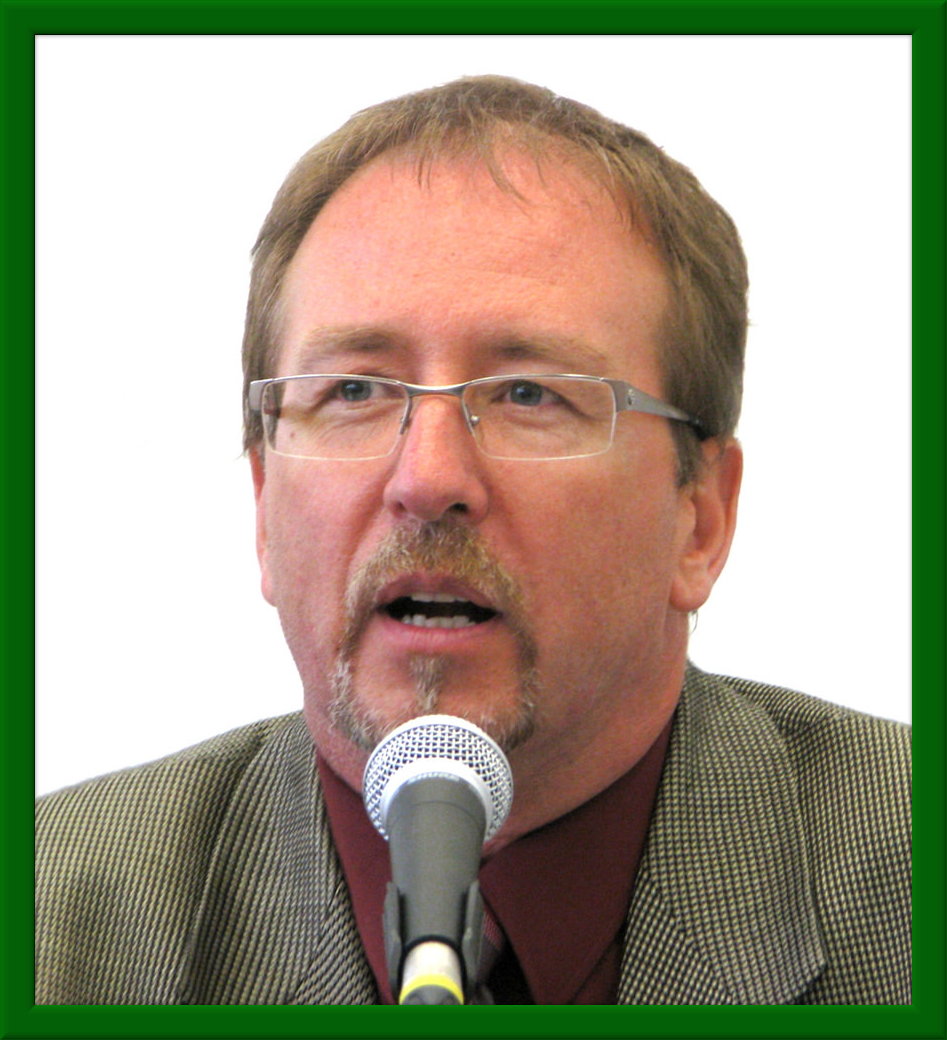
David Weber
Kitchener
David Weber was the Kitchener South—Hespeler Green Party candidate during the 2015 federal election. This letter appeared in The May 25th, 2016 Record
Fair Vote presentation at the Proportional Representation Learning Community (at Seven Shores)The second Waterloo Green Party Learning Community will kick off on Sunday June 5th at Seven Shores Urban Market & Cafe in Waterloo.
Proportional Representation was the topic we explored in the first Green Learning Community series hosted by the Green Party of Waterloo’s Kris Braun and Bryan Izzard.
Recently you’ve likely heard of Guaranteed Livable Income (GLI), sometimes called Basic Income, which was implemented in a Western town as a pilot program called “Mincome” in the 1970’s. Since the GLI is an important Green Party policy plank, this is a good opportunity to figure out what this radical social policy is all about. As a learning community, we’ll set our own direction and investigate with open minds. Our series will likely have three sessions, but you’re welcome to come to any even if you miss others.
Our first session will feature a presentation from John Green from Basic Income Waterloo Region and brainstorming on what we’d like to learn for our next session.
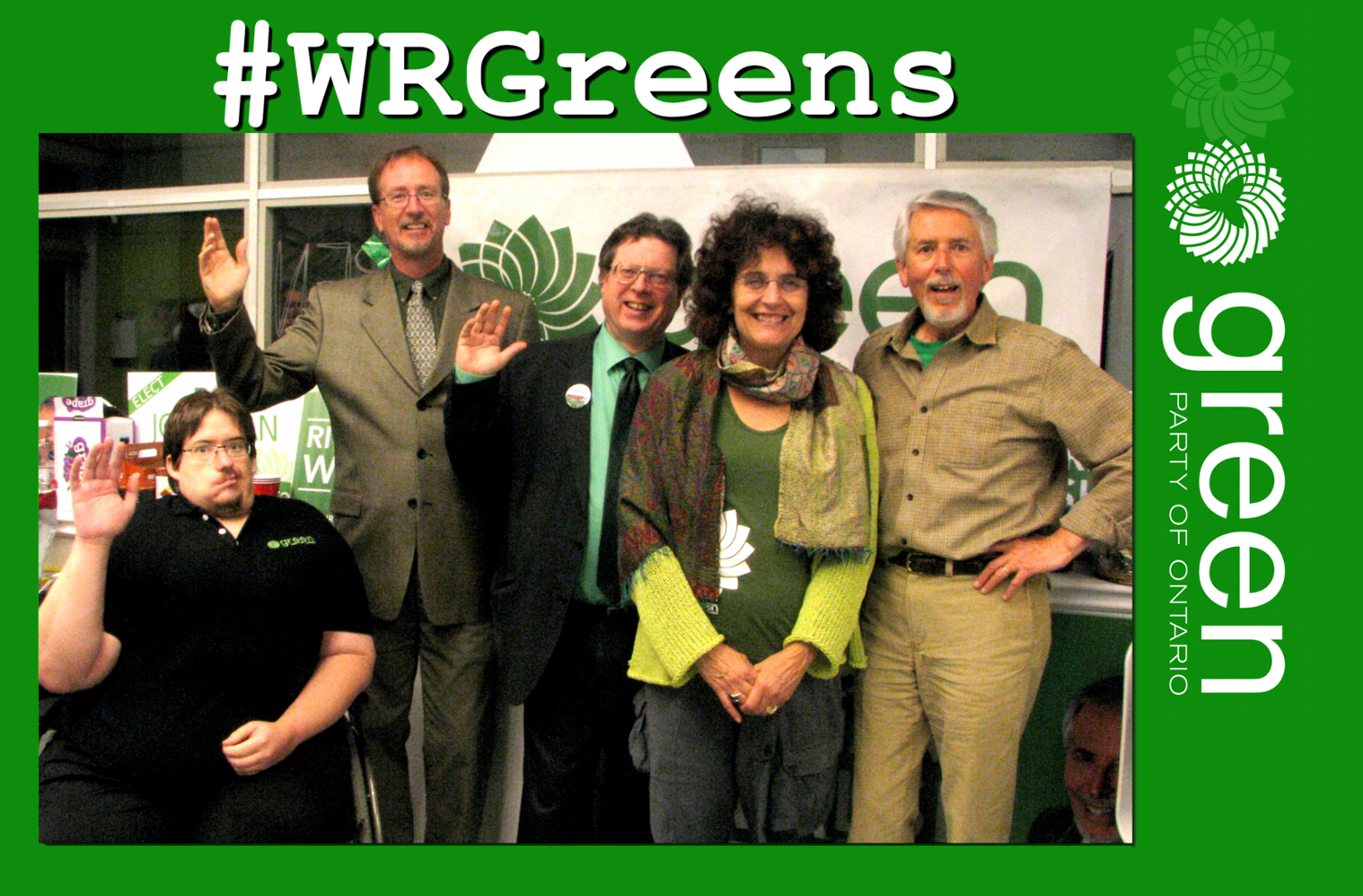
Thanks so much to the five Waterloo Region Green Party Candidates invested so much of themselves in standing for public office in Canada’s 42nd federal election in 2015:
Nicholas Wendler (Kitchener-Centre)
David Weber (Kitchener-South Hespeler)
Bob Jonkman (Kitchener-Conestoga)
Michele Braniff (Cambridge)
Richard Walsh (Waterloo)
Running for a small party is much more difficult than running for a large party, especially when faced with an additional handicap of waves of so-called “strategic voting.” In spite of this, every one of our candidates pushed themselves to the limit and ran positive campaigns. Green Party folk can be rightfully proud of our WRGreens, who represented themselves with grace and commitment.
Canadian citizens demand the following basic democratic rights:
– To cast an equal and effective vote and to be represented fairly in Parliament, regardless of political belief or place of residence
– To be governed by a fairly elected Parliament where the share of seats held by each political party closely reflects the popular vote
– To live under legitimate laws approved by a majority of elected Parliamentarians representing a majority of voters
The need for reform is urgent, and Canadians need a Parliament that represents the political and social diversity of Canada.
You can download and print your own copies of the petition that you can mail to Elizabeth May when you’re done. I know it will be nice to have paper copies of the petition at the WRGreens information tables we’ll have in the upcoming summer festival season.
Today (Friday 13 May, 2016) is the last day the public can weigh in on this awful open pit mine project.
Canada’s First Nations peoples have always stood up in defense of the land; it is important that all Canadians do our part. I’ve just got the information, which I dressed up into this very long submission. If I wasn’t sharing this with you here, I would probably have picked one or two things and made a much shorter submission, but since I’m sharing this here I decided to load up the whole works. Submissions don’t have to be long and complicated; feel free to make use of this.
sissonproject@ceaa-acee.gc.ca
Catherine.McKenna@parl.gc.ca
Subject: Sisson Mine Project, Registry # 63169
To: The Canadian Environmental Assessment Agency and The Honourable Catherine McKenna
I am pleased to raise my voice in support the Maliseet First Nations who rightly oppose the proposed open-pit mine because of the terrible impact it will have on them and the environment. As big as Canada is, we simply can not afford the risk of environmental contamination we know will result from the Sisson open pit mine.
Since the Canadian government has finally endorsed the United Nations Declaration on the Rights of Indigenous Peoples it is unthinkable that a project that will so dramaticaly interfere with Maliseet First Nations people’s right to traditional use of crown land would even be considered.
Please heed the serious concerns of the Canadian citizens of the Maliseet First Nations. Don’t put the commercial interests of a private mining corporation ahead of the well being of Canadians and our environment. Government should seek to protect public health and safety, to ensure that the lives o citizens are not negatively impacted and/or endangered by a project like this open pit mine so fraught with risk. More and more people around the world are realizing that jobs aren’t any good if you can’t breathe the air or drink the water or grow food it is safe to eat.
The Sisson open-pit mine project is predicted to result in the loss of land (approximately 1,253 hectares), and residual impacts on resources used by Maliseet and Mi’gmag First Nations for traditional purposes.
The possibility of even a handful of the potential risks identified in the CEAA’s own report on the Sisson mine should be enough to halt this project.
The Canadian Environmental Assessment Agency (CEAA) report on the open pit mine reveals:
negative effects on the atmospheric environment from emissions such as dust, odour, noise and vibration;
water quality degradation as a result of seepage (beween 130 and 170 litres per second!) from the tailings storage facility and release of water from the water treatment plant (i.e. increased concentrations of trace metals);
changes in water quantity and flow regimes as a result of water retention and discharges;
effects on fish and fish habitat including the direct and indirect loss of habitat;
fish would be lost,
effects on wildlife, including species at risk, from ingestion of contaminants, sensory disturbance, and habitat loss;
direct loss (destruction) and changes in the function of wetlands, including removal and alteration of habitat supporting avian species at risk;
people intermittently using the project area for hunting, fishing, trapping, and other activities may be exposed to elevated levels of contaminants in the atmosphere, drinking water, or in harvested foods
effects on human health from consumption of country food and water impacted by project emissions and discharges;
the tailings pond would seep into the surrounding environment,
water contaminated through mine contact and processing on the site would be discharged downstream,
that waste rock would generate acids,
local fresh-water resources would be used in the various processes on the site,
negative effects on the current use of lands and resources for traditional purposes by Aboriginal persons including hunting and fishing,
negative effects on archaeological resources; and
and that hazardous materials would be stored there to the extent that Emergency Response Plans would be required.
The CEAA concludes the Project is likely to result in significant adverse environmental effects on the current use of lands and resources for traditional purposes by Maliseet First Nations. Only a limited number of large contiguous Crown land blocks, particularly along the Saint John River valley, remain available to practice current uses for traditional purposes proximal to the Maliseet communities of Tobique, Kingsclear, Woodstock, and St. Mary’s First Nations. Within the remaining Crown land blocks, use by these First Nations is limited by other existing land uses. Given this context, the Agency concludes that the environmental effects of the Project, in combination with the cumulative environmental effects of other projects and activities, on the current use of lands and resources by Maliseet First Nations are also likely to be significant.
Health Canada, Maliseet First Nation and Mi’gmag First Nation have all asked for more samples to be collected showing pre-existing “baseline concentrations of potential contaminants in fish, wildlife, and vegetation.” The Ministry of Environment and Climate Change Canada asked “the proponent to commit to follow-up studies of metal concentrations in wildlife species important to resource users and First Nations.”
And yet, according to the CEAA report, the proponent stated that “no further monitoring was warranted.”
The mining company’s consultants neglected to include arsenic in the non-carcinogenic risk evaluation, even though they admit arsenic concentrations may increase in local surface waters.
There is also no known solution to the risk of increased boron concentrations in fish tissue. We know evaluating trace metal impacts on human health after it occurs is not in keeping with the precautionary principle of avoidance, rather than insufficient mitigation and post-tragedy studies.
That the mine consultants “predicted a total tailings storage facility seepage rate between 130 and 170 litres per second and losses from the seepage collections system to groundwater between ten and 30 litres per second during operations” it is clear harmful water will not be under control on site
There are a lack of air quality monitoring commitments from the mine
In light of all of these things, it is grossly irresponsible to burden citizens with the responsibility of proving harmful water impacts have been caused by the mining company before investigation and mitigation by the proponent would occur.
The wishes of the First Nations communities opposing the Sisson mine must be respected; this project must not be given approval.
Understand our options for voting reform with a presentation by FairVote Canada WRC followed by a discussion. This was highly requested by people from our past events, and is a perfect event to invite others who would like to join and learn. The presentation format will make this very accessible. (Hosted by the Green Party of Waterloo.)
The leap must begin by respecting the inherent rights and title of the original caretakers of this land, starting by fully implementing the United Nations Declaration on the Rights of Indigenous Peoples.
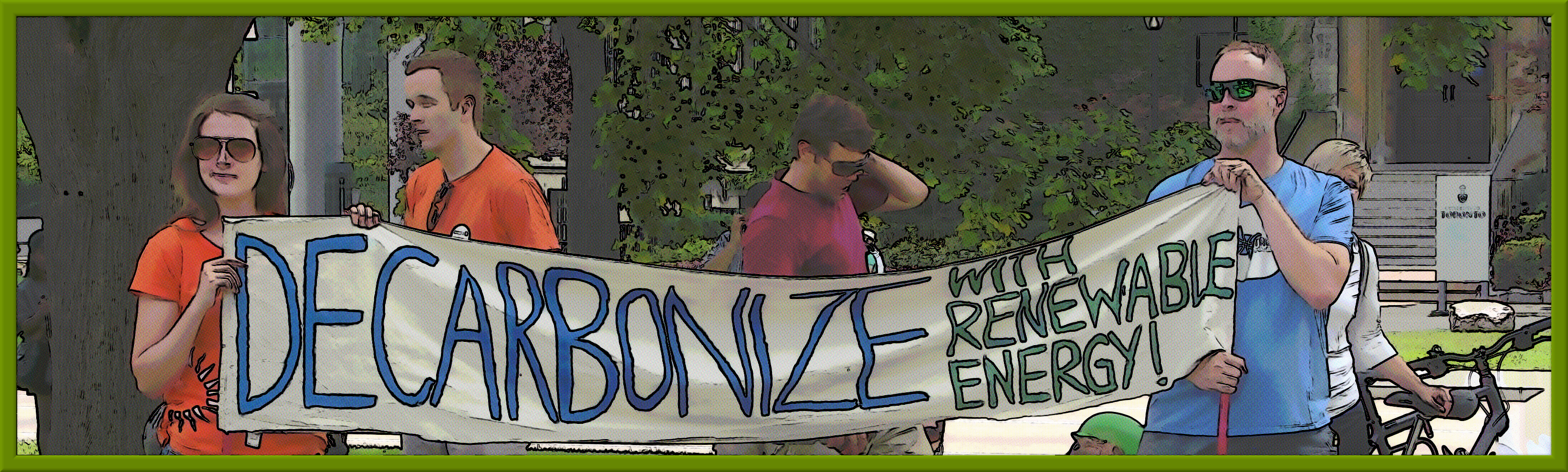
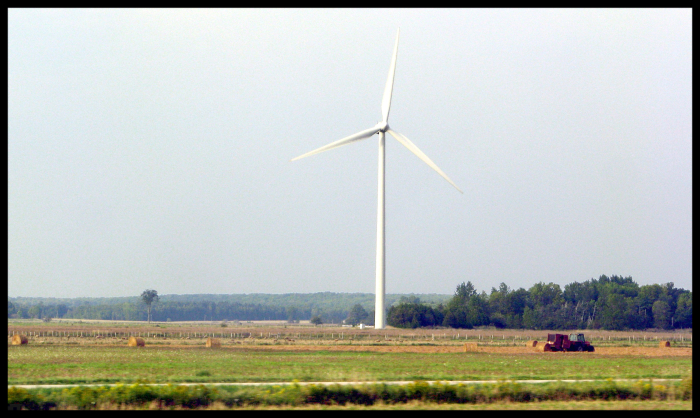
The latest research shows we could get 100% of our electricity from renewable resources within two decades; by 2050 we could have a 100% clean economy. We demand that this shift begin now.
No new infrastructure projects that lock us into increased extraction decades into the future. The new iron law of energy development must be: if you wouldn’t want it in your backyard, then it doesn’t belong in anyone’s backyard.
The time for energy democracy has come: wherever possible, communities should collectively control new clean energy systems. Indigenous Peoples and others on the frontlines of polluting industrial activity should be first to receive public support for their own clean energy projects.
We want a universal program to build and retrofit energy efficient housing, ensuring that the lowest income communities will benefit first.
We want high-speed rail powered by just renewables and affordable public transit to unite every community in this country – in place of more cars, pipelines and exploding trains that endanger and divide us.
We want training and resources for workers in carbon-intensive jobs, ensuring they are fully able to participate in the clean energy economy.
We need to invest in our decaying public infrastructure so that it can withstand increasingly frequent extreme weather events.
We must develop a more localized and ecologically-based agricultural system to reduce reliance on fossil fuels, absorb shocks in the global supply – and produce healthier and more affordable food for everyone.
We call for an end to all trade deals that interfere with our attempts to rebuild local economies, regulate corporations and stop damaging extractive projects.
We demand immigration status and full protection for all workers. Canadians can begin to rebalance the scales of climate justice by welcoming refugees and migrants seeking safety and a better life.
We must expand those sectors that are already low-carbon: caregiving, teaching, social work, the arts and public-interest media. A national childcare program is long past due.
Since so much of the labour of caretaking – whether of people or the planet – is currently unpaid and often performed by women, we call for a vigorous debate about the introduction of a universal basic annual income.
We declare that “austerity” is a fossilized form of thinking that has become a threat to life on earth. The money we need to pay for this great transformation is available — we just need the right policies to release it. An end to fossil fuel subsidies. Financial transaction taxes. Increased resource royalties. Higher income taxes on corporations and wealthy people. A progressive carbon tax. Cuts to military spending.
We must work swiftly towards a system in which every vote counts and corporate money is removed from political campaigns.
The idea that going green is going to cost us jobs is purely a myth. Alberta’s lost jobs are directly attributable to the fact the fossil fuel companies bailed when they failed to get the profit they wanted. There’s plenty of evidence the reverse is true. There is good information available on the Leap site, including downloadable info, a paper sign up sheet so people can get added to the petition &tc.. Best of all, there is an online list of signatories, so we know which of our family and friends are missing 😀
And the Fossil Fuel companies want pipelines, and now they are driving the political process with fear. That’s why, in spite of everything we know, there is talk the Liberals want to fast track the Energy East Pipeline! We must make sure the Paris Accord isn’t just window dressing and now they can get back to business as usual. That’s why it is important.
Please sign, share, and talk to your family and friends about this.
Green Party policy requires a leadership review following every election.
In spite of disappointing results in the most strategically voted election in Canadian history, the federal Green Party membership rallied in support of Ms. May, who has infused the party with her inspiring leadership. The month long review returned a stunning 93.6% approval!
“I’m humbled to receive a strong mandate from our engaged membership to continue in my role as leader,” May said in a statement to reporters Monday.
“I will continue to pursue critical issues that are so important to our members, from climate action to restoring legitimacy in the environmental review process, from ending subsidies for fossil fuels to becoming a world leader in the 21st century renewable energy economy.”
I am so tired of excuses. Money isn’t real: it is merely a symbol that only has meaning because we believe in it. Our environment, on the other hand, is real.
 A dozen committees and commissions already conducted in Canada all conclude that PR is needed for a government that really represents voters’ intentions. I don’t want smoke-and-mirrors propaganda derailing the public from what is in their best interest. I don’t need a referendum hijacked, again, by big money and the elite to keep our biased system that mostly works for them.




 These are the 15 Leap Manifesto Demands: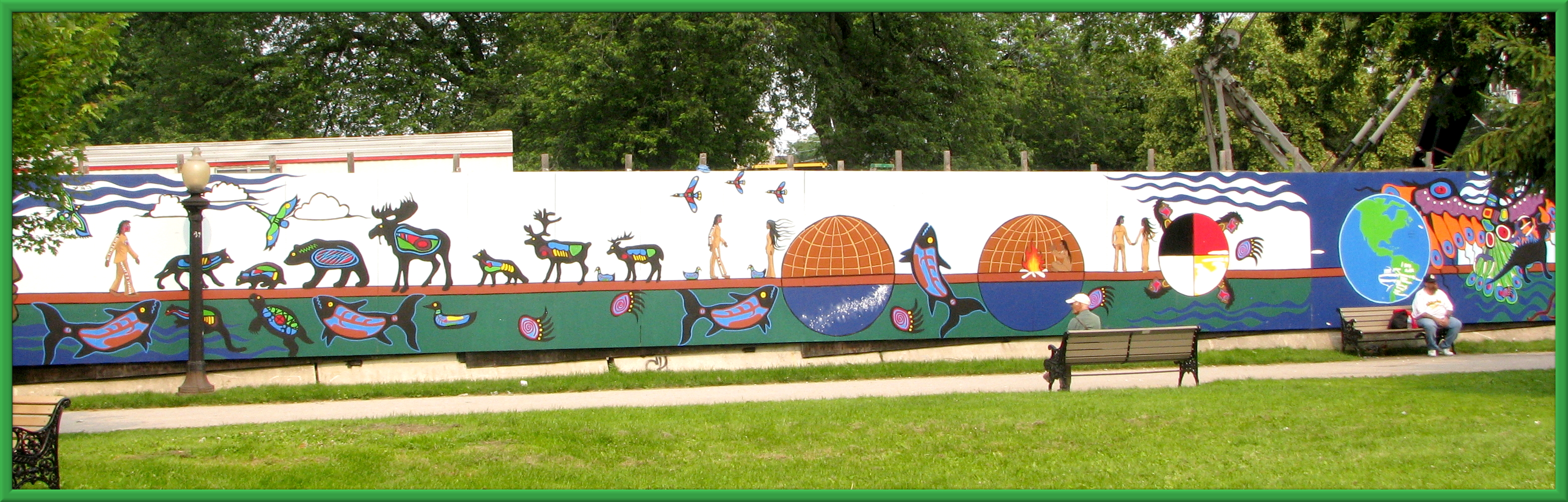

 Green Party policy requires a leadership review following every election.